

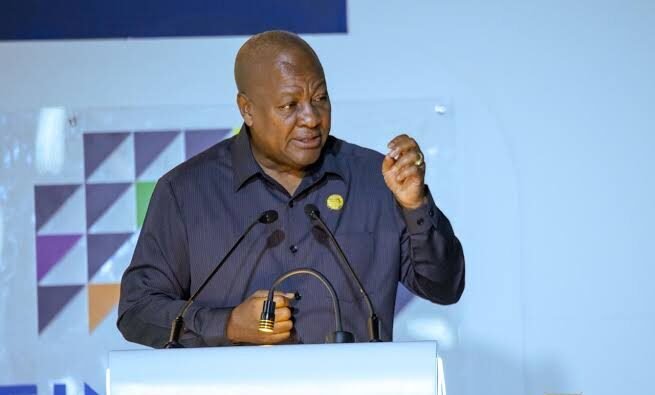
President John Dramani Mahama has outlined five key areas Ghana wants addressed in proposed discussions on reparatory justice with the United Kingdom, the African Union (AU), CARICOM and the African diaspora.
The proposed agenda includes a formal apology for the transatlantic slave trade, the restitution of stolen cultural artefacts, targeted investments in education, healthcare and youth empowerment, efforts to dismantle systemic racism, and strategic development partnerships to address structural poverty and inequalities in the global economic system.
President Mahama said the discussions must go beyond acknowledging historical atrocities and result in concrete measures to address the lasting effects of slavery and colonialism.
His position follows comments by British Prime Minister Andy Burnham, who has expressed openness to calls for a formal apology on behalf of the British state and proposed structured dialogue with communities affected by the transatlantic slave trade. Burnham, however, has ruled out financial reparations.
In a statement issued on Sunday, November 1, President Mahama welcomed Burnham’s acknowledgement of the human rights violations associated with the slave trade and the British government’s willingness to consider a formal apology.
“As African Union Champion on Reparations and Chair of the Global Advisory Panel on Reparatory Justice, I commend the statement for its bold, reflective, conciliatory, and honest reckoning with the UK’s legacy of slavery and colonialism,” he said.
President Mahama said the proposed dialogue should address five key areas, including a formal apology; a coordinated international commitment to dismantling systemic racism and Afrophobia; targeted investments in education, science, youth empowerment, climate resilience and healthcare; the restitution of stolen cultural heritage; and strategic development partnerships.
Such partnerships, he said, should address structural poverty and reform inequitable global economic and debt arrangements that continue to constrain developing countries, as highlighted by the Accra Reset and the Bridgetown Initiative.
He described the UK’s position as a significant development in the international campaign for reparatory justice, particularly following the adoption of a Ghana-led United Nations resolution recognising the transatlantic slave trade and the racialised enslavement of Africans as the gravest crime against humanity.
He noted that the development was particularly significant given Britain’s decision to abstain during the vote on the resolution.
Although he acknowledged that the parties might hold differing positions on aspects of reparatory justice, he said those differences should not undermine their shared objective of achieving healing and redress.
“We recognise, as our partners do, that our perspectives on reparatory justice may not be identical. There are clearly areas of strong disagreement, but such differences must not deter us from the shared objective,” he said.
President Mahama identified the Accra Next Steps Commitments, CARICOM’s Ten Point Plan and the AU’s declarations on reparatory justice as key frameworks to guide the proposed discussions.
He also reiterated the need for the return of stolen cultural artefacts and development partnerships that would address structural poverty and reform unfair global economic and debt arrangements.
President Mahama reaffirmed Ghana’s solidarity with African countries, CARICOM and people of African descent in the Americas, expressing the hope that the proposed engagement would lead to lasting justice, reconciliation and an end to racial discrimination.